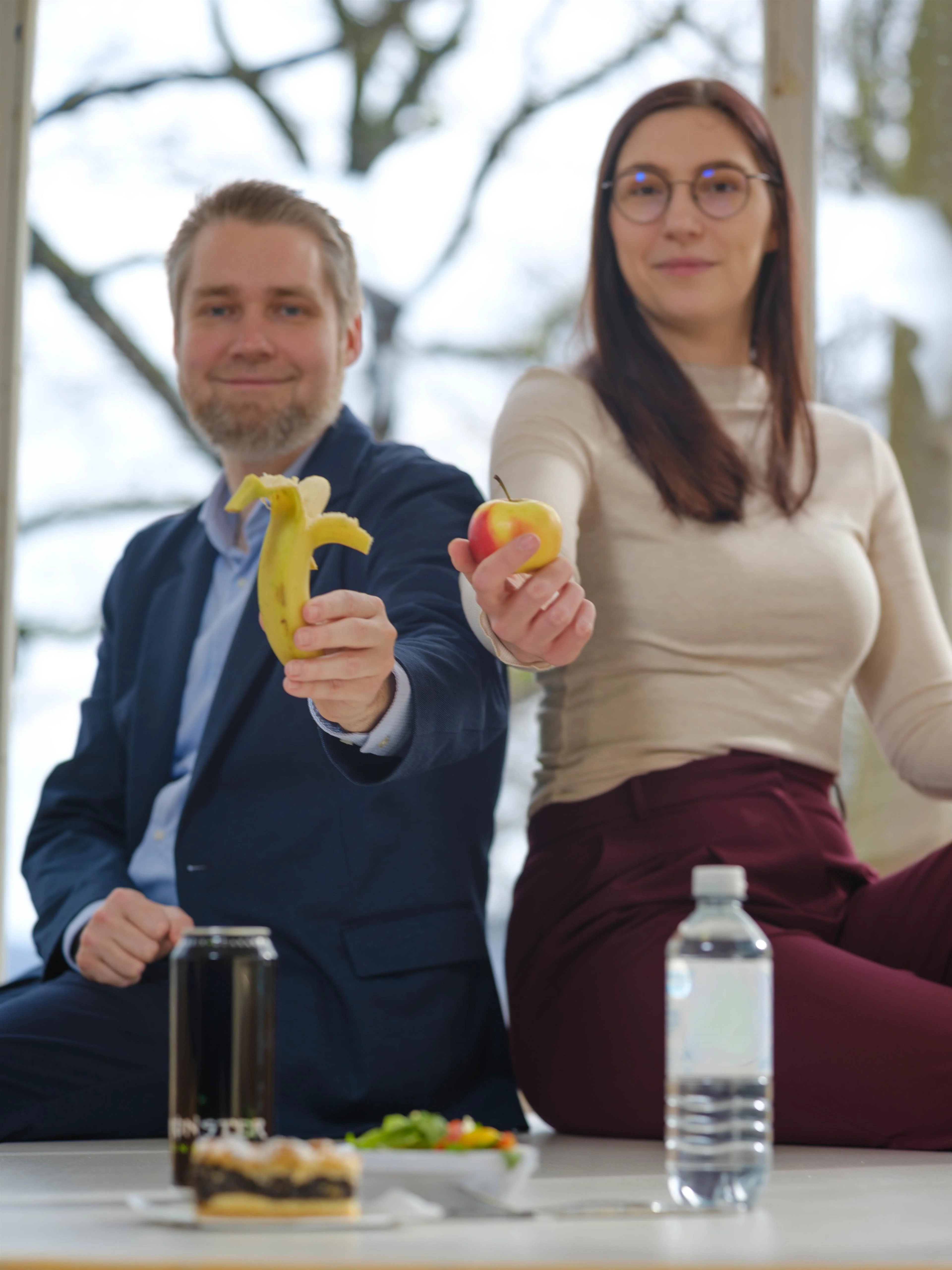
In our new paper, we challenge how anhedonia is understood — and point toward the gut-brain axis as a promising therapeutic target.
One of the most recognizable symptoms of depression is anhedonia: the apparent inability to feel pleasure. It is listed in diagnostic criteria, measured by widely used clinical scales, and often described as a loss of enjoyment But what if that description has been wrong all along? In our new paper published in Cell Reports Medicine, we show that the problem in depression may not be about experiencing pleasure at all — it may be about expecting it. The findings have implications not only for how we understand depression, but for how we measure and treat it.

Cookies, Wanting, and Liking
We recruited 52 patients with major depressive disorder (MDD) and 51 matched healthy control participants. All completed metabolic assessments and a food reward task in which they rated their “wanting” and “liking” — first in anticipation of a food reward, then again once the food was actually in front of them, and finally after tasting the food.
The results were striking. Patients with depression reported significantly less desire (“wanting”) for the food rewards during anticipation. But as soon as the food was directly in front on them, something changed: their wanting ratings rose sharply — to levels that were comparable to those of healthy participants.
Crucially, this increase from anticipation to consummation was larger, not smaller, in the patient group. Far from being unable to enjoy food, patients with depression appeared to enjoy it just as much as healthy individuals once it was right in front of them. The deficit was in the build-up, not the payoff.
Rethinking Anhedonia
The same pattern emerged when we looked at anhedonia as a continuous measure rather than at depression as a diagnostic category. Higher levels of anhedonia were linked to lower anticipatory wanting and steeper increases once food rewards became available — further supporting the idea that anhedonia reflects impaired reward anticipation, not diminished consummatory pleasure.
This has direct consequences for how anhedonia is measured clinically. The Snaith–Hamilton Pleasure Scale (SHAPS), one of the most commonly used tools in both research and clinical practice, asks patients to rate their enjoyment of activities such as hobbies, social interaction, and food. Our findings suggest that such scales may be capturing anticipatory deficits — patients imagining how much they will enjoy something — rather than deficits in actual enjoyment. Calling this “anhedonia,” in that case, may be a misnomer.
The implication for treatment is clear: interventions should target anticipation and motivation, not just pleasure itself.
The Metabolic Connection
Beyond the reward findings, our study also points toward an often-overlooked dimension of depression: metabolism. Two key associations emerged from our metabolic assessments.
First, higher levels of acyl ghrelin — a gut-derived hormone involved in hunger and reward — were associated with higher food reward ratings across both groups, independently of whether patients were in the anticipation or consummation phase. Second, reduced insulin sensitivity was associated with more severe anhedonia.
Together, these findings suggest that the gut-brain axis plays a meaningful role in depressive symptomatology. Rather than treating depression purely as a disorder of the brain, the results point toward metabolic phenotyping as a future avenue for improving how patients are assessed and, ultimately, how treatment is allocated.
Looking Ahead
This work was led by our PhD student Corinna Schulz as part of a project funded by the German Research Foundation (DFG), with coauthors Johannes Klaus, Franziska Peglow, Sabine Ellinger, Anne Kühnel, Martin Walter, last author Nils Kroemer, and contributions from the broader neuroMADLAB team.
We hope these findings spark important questions about the validity of current diagnostic tools and the biological mechanisms linking metabolism to mood. This is only the beginning of our broader effort to use metabolic phenotyping to understand and treat depression more precisely.
The full paper is available open access in Cell Reports Medicine.